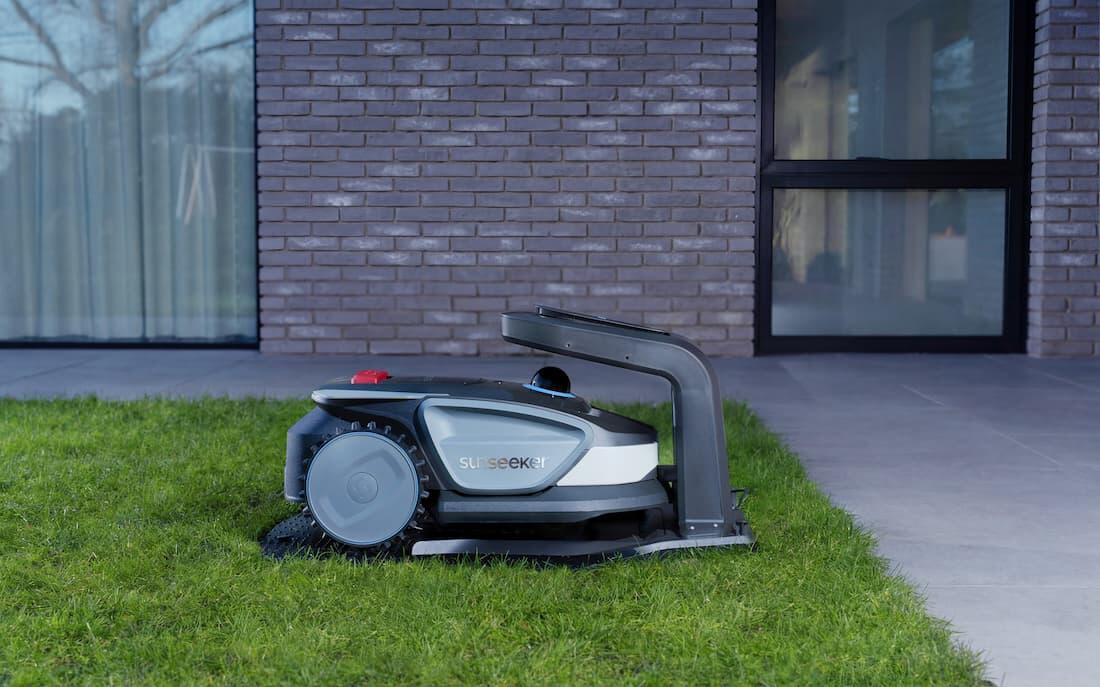
What Is a Self-Propelled Lawn Mower?
A self-propelled lawn mower is a walk-behind mower that can move forward on its own. Instead of relying only on your strength to push it, the mower uses a drive system to power the wheels while the blade cuts the grass. You still walk behind the mower and guide its direction, but the machine does much of the hard work for you.
This makes mowing feel easier, especially when the grass is thick, the yard is large, or the ground is uneven. For many homeowners, a self-propelled mower turns a tiring job into a much more manageable part of lawn care.
You may also wonder, what is a self propelled gas lawn mower? It is simply a self-propelled mower that runs on a gas engine. The engine powers both the cutting blade and the wheel drive system, giving the mower strong performance and steady movement. Because of this, gas self-propelled mowers are often a good fit for larger lawns, slopes, and tougher mowing conditions.
How Does a Self-Propelled Lawn Mower Work?
A self-propelled lawn mower works by using a built-in drive system that transfers power from the engine or motor to the wheels, allowing the mower to move forward on its own while you guide its direction. Instead of relying entirely on pushing force, the machine handles most of the movement. When running, the engine or motor splits power between spinning the cutting blade and driving the transmission, which then converts this power into controlled wheel movement to propel the mower across the lawn.
To activate the system, you squeeze a drive lever or bail on the handle, which engages the transmission and sends power to the wheels. Releasing the lever or bail stops the forward motion, while the blade may continue spinning depending on the model. They can be powered by petrol, rechargeable batteries, or mains electricity, and may have fixed or variable speed settings to match your walking pace.
What Are the Different Types of Self-Propelled Mowers?
These machines are categorized by which wheels receive power from the transmission, which dictates how the mower handles various terrains and obstacles.
- Front-Wheel Drive (FWD): These are often the least expensive models and are best for flat lawns with obstacles like flowerbeds or trees. Because power goes to the front, you can easily pivot and turn the machine by slightly lifting the front wheels off the ground.
- Rear-Wheel Drive (RWD):If you are looking for what is a good self propelled gas lawn mower for hilly terrain, RWD is the ideal choice. This system provides superior traction on slopes because the mower's weight naturally shifts to the rear wheels during a climb, increasing their grip.
- All-Wheel Drive (AWD):Similar to a 4x4 vehicle, this type powers all four wheels simultaneously. It offers the maximum level of control and balance, making it perfect for large yards that combine steep inclines, wet grass, and rough patches.
In addition to traditional walk-behind models, some homeowners also choose robotic self-propelled mowers for a fully automated mowing experience. Autonomous models like the Sunseeker S4 use advanced sensors and mapping technology to navigate and maintain your lawn without manual steering.
What Are the Pros and Cons of Using a Self-Propelled Mower?
When looking for what is a good self propelled gas lawn mower, it is important to weigh the benefits against the potential drawbacks.
Pros:
- Reduced Physical Strain: Eliminates the repetitive pushing that causes back and arm fatigue.
- Efficiency: Allows you to cover more ground quickly, especially in thick grass.
- Better Results: Maintains a consistent speed for a smoother, more uniform cut.
- Traction: Much easier to handle on hills and sloped landscapes.
Cons:
- Higher Cost: Generally more expensive than standard push mowers due to the drive components.
- Weight: The added transmission and larger engines make them significantly heavier.
- Maintenance: More moving parts (belts, pulleys, cables) require occasional repair or adjustment.
Is a Self-Propelled Mower Right for You?
Deciding if a self-propelled mower is the right choice for your home depends on three main factors:
- Yard Size: They are highly recommended for properties larger than 500 m².
- Terrain: If your lawn has steep slopes or many hills, a self-propelled model (especially RWD or AWD) is almost essential for safety and ease of use.
- Physical Health: If you have limited upper-body strength, joint issues, or back problems, these mowers help you maintain your lawn without overexertion.
While a simple push mower might suffice for a small, flat lawn, a self-propelled model is a valuable investment for anyone looking to save time and reduce the physical demands of gardening. For those seeking a completely "effortless" experience, the Sunseeker S3 offers a wireless robotic alternative. It uses AI-assisted mapping and a DualFusion navigation system to handle complex environments without the need for manual steering or boundary wires.
Conclusion
Understanding what is a self propelled lawn mower helps homeowners choose the right equipment for easier and more efficient lawn maintenance. Unlike traditional push mowers, these machines use a powered drive system to move forward automatically, reducing physical strain while improving mowing speed and consistency. From Front-Wheel Drive models for flat lawns to AWD systems for challenging terrain, there are options available for different yard sizes and conditions.
FAQs
Which is better, a self-propelled or push mower?
Choosing between the two depends on your yard size and terrain. Self-propelled mowers are superior for lawns larger than 1000 m² or those with hills and slopes, as they reduce physical fatigue by providing the driving force. Conversely, push mowers are ideal for small, flat yards where simple maneuverability and lower cost are priorities.
Can you just push a self-propelled lawn mower?
Yes, you can manually push a self-propelled mower by simply not engaging the drive bar on the handle. When disengaged, the wheels turn freely, which is useful for navigating tight spots or moving backwards. However, because of the extra internal drive components, these machines are heavier and require more force to move than a standard push mower. You can also pull them backwards without damaging the drive system.
How long does a self-propelled lawn mower last?
A quality self-propelled mower typically lasts between 8 to 10 years, though some can exceed a decade with meticulous care. Longevity depends on regular maintenance, including annual oil changes, cleaning air filters, and proper storage. While gas models often have a longer lifespan than electric ones, you should expect to replace wear items like drive belts every few seasons to maintain peak performance.