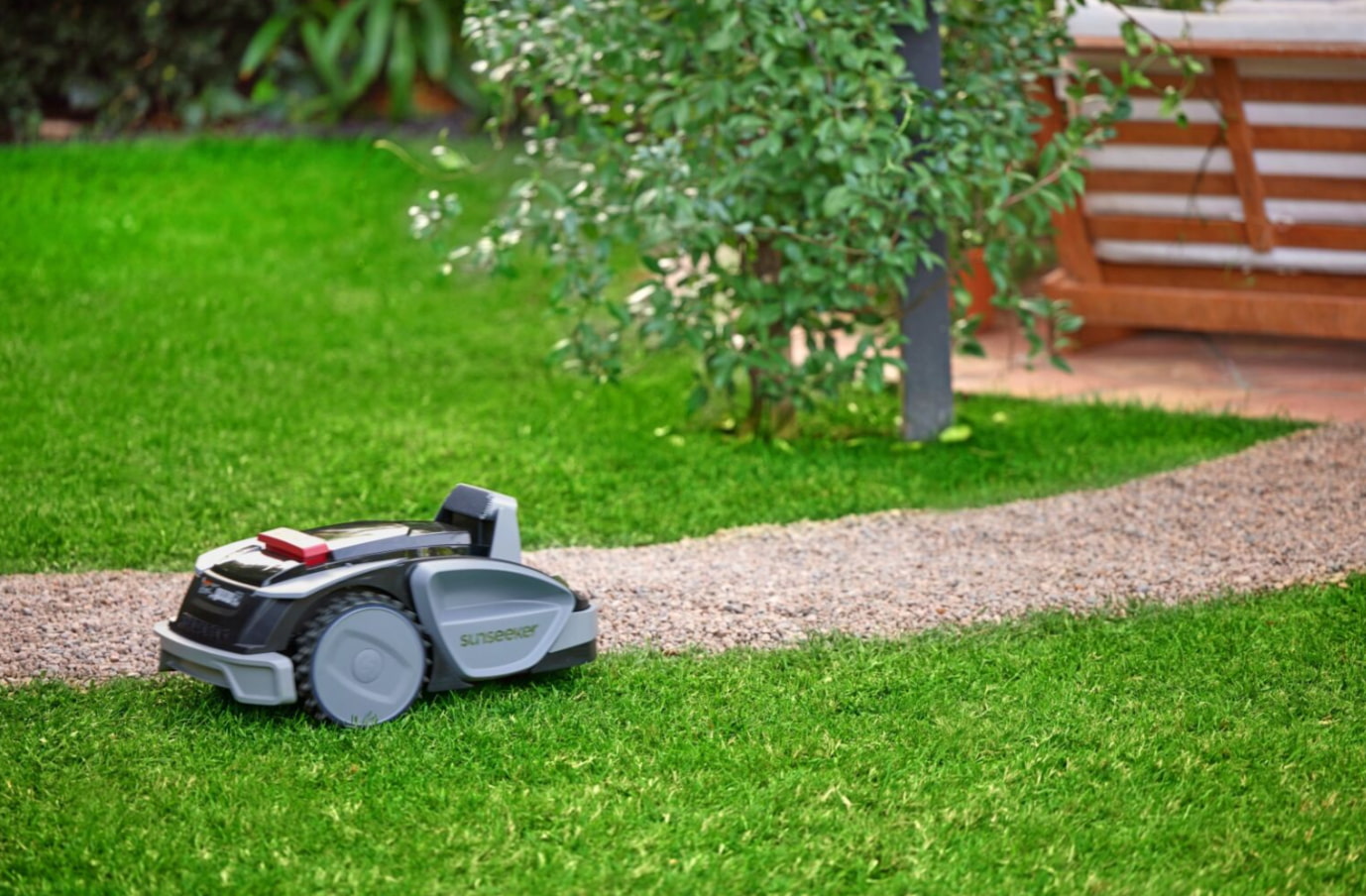
What is the Price Range for a Robot Lawn Mower?
The cost of a robotic lawn mower is not a fixed number but a broad spectrum, typically starting around €1,000 for basic functionality and extending beyond €5,000 for commercial-grade performance. This wide variation reflects fundamental differences in capability, technology, and intended use. To make an informed decision, one must understand the factors that drive this pricing and how different investment levels translate to real-world benefits for your property.
Navigating the Price Tiers of Robotic Mowers
Robotic mowers are segmented into distinct categories, each designed for specific lawn sizes and user expectations. The following overview clarifies what each price bracket generally offers.
A Breakdown of Robotic Mower Price Categories
|
Category
|
Typical Price Range
|
Ideal Lawn Size
|
Core Characteristics
|
Ideal User Profile
|
|
Entry-Level / Residential Basic
|
Up to €1,500
|
Under 1000m²
|
|
First-time buyers with small, flat, simple lawns seeking hands-off maintenance.
|
|
Mid-Range / Residential Advanced
|
€1,500 – €3,000
|
1,000m²–
3,000m²
|
-
GPS or hybrid navigation
-
app control
-
improved slope handling
-
multi-zone support
|
Homeowners with moderate-sized lawns who value smart features and a balance of price and performance.
|
|
Premium / Light Commercial
|
€3,000 – €5,000
|
3,000m²–
6,000m²
|
-
advanced navigation
-
all-terrain drive
-
large battery capacity
-
high durability
|
Owners of large, sloped, or complex properties demanding maximum automation and reliability.
|
|
Commercial Grade
|
€6,000 – €20,000+
|
6,000+m²
|
|
Golf courses, resorts, estates, and professional landscaping services.
|
Defining the Value Within Each Tier
A closer examination of these tiers reveals the tangible benefits associated with each price point:
1. Essential Automation for Compact Spaces(Up to €1,500)
Models in this category deliver the core promise of robotic mowing: automated cutting and time savings. They are engineered for simplicity, often utilizing a perimeter wire or Vision AI for navigation like the Sunseeker V1. While they may lack sophisticated smart features, they reliably maintain small, flat lawns, representing the most accessible entry point into automated lawn care.
2. The Balanced Choice for Modern Homes(€1,600 – €3,000)
This tier introduces the convenience of modern technology. Wire-free setup via GPS, LiDAR or hybrid system mapping becomes standard, alongside full smartphone app integration for scheduling and control. These mowers handle moderate slopes and can manage lawns divided into distinct zones, offering a significant upgrade in convenience and efficiency for the average suburban yard.
3. High-Performance for Demanding Landscapes(€3,000 – €5,000)
Designed for challenging terrain and larger areas, these mowers feature robust construction, powerful motors, and sophisticated navigation systems that ensure precise coverage on steep inclines and around numerous obstacles. Their extended battery life and advanced software provide a nearly completely hands-free experience, justifying the investment for properties where other models would struggle.
4. Professional Durability for Extensive Grounds (€6,000 – €20,000+)
Commercial-grade machines are built for endurance and large-scale efficiency. They prioritize durability, weather resistance, and the ability to operate for long hours across vast or intricate landscapes. These units represent a tool for business operations or the maintenance of very large private estates.
Primary Factors Influencing Robot Mower Pricing
Several key engineering and design choices directly determine the final cost of a robotic mower.
Lawn Specifications: Size, Slope, and Layout
The physical characteristics of your yard dictate the necessary specifications of the mower. Larger lawns require more powerful motors and higher-capacity batteries to complete the job efficiently. Slopes demand specialized drive systems and software algorithms to maintain traction and prevent slippage.
Complex layouts with narrow passages or numerous obstacles necessitate more advanced sensors and mapping intelligence. Each added requirement increases manufacturing complexity and cost.
Navigation and Guidance Systems
The method by which a mower navigates is a major cost driver. Basic boundary wire systems are mechanically simple but place the installation burden on the user. More advanced solutions, such as satellite-based GPS for virtual mapping or onboard LiDAR and vision systems for real-time environmental awareness, involve significantly more expensive hardware and software development.
These systems, however, offer easier setup and more efficient, systematic mowing patterns, providing greater long-term value.
Battery Capacity and Endurance
Battery technology is central to performance. Higher-priced models incorporate larger, more advanced lithium-ion battery packs that enable longer runtime and faster charging cycles. This allows them to cover greater areas between charges and reduces overall cycle time. The associated power management systems and thermal controls also contribute to the cost but are essential for reliability and battery lifespan.
Smart Features and Connectivity
The level of intelligence and user control significantly impacts price. Features like detailed multi-zone scheduling, weather adaptation, integration with other smart home ecosystems, theft prevention via GPS tracking, and over-the-air software updates require sophisticated onboard computing, reliable connectivity modules (Wi-Fi, cellular), and continuous software support. These capabilities enhance convenience and autonomy but add to the unit's complexity and price.
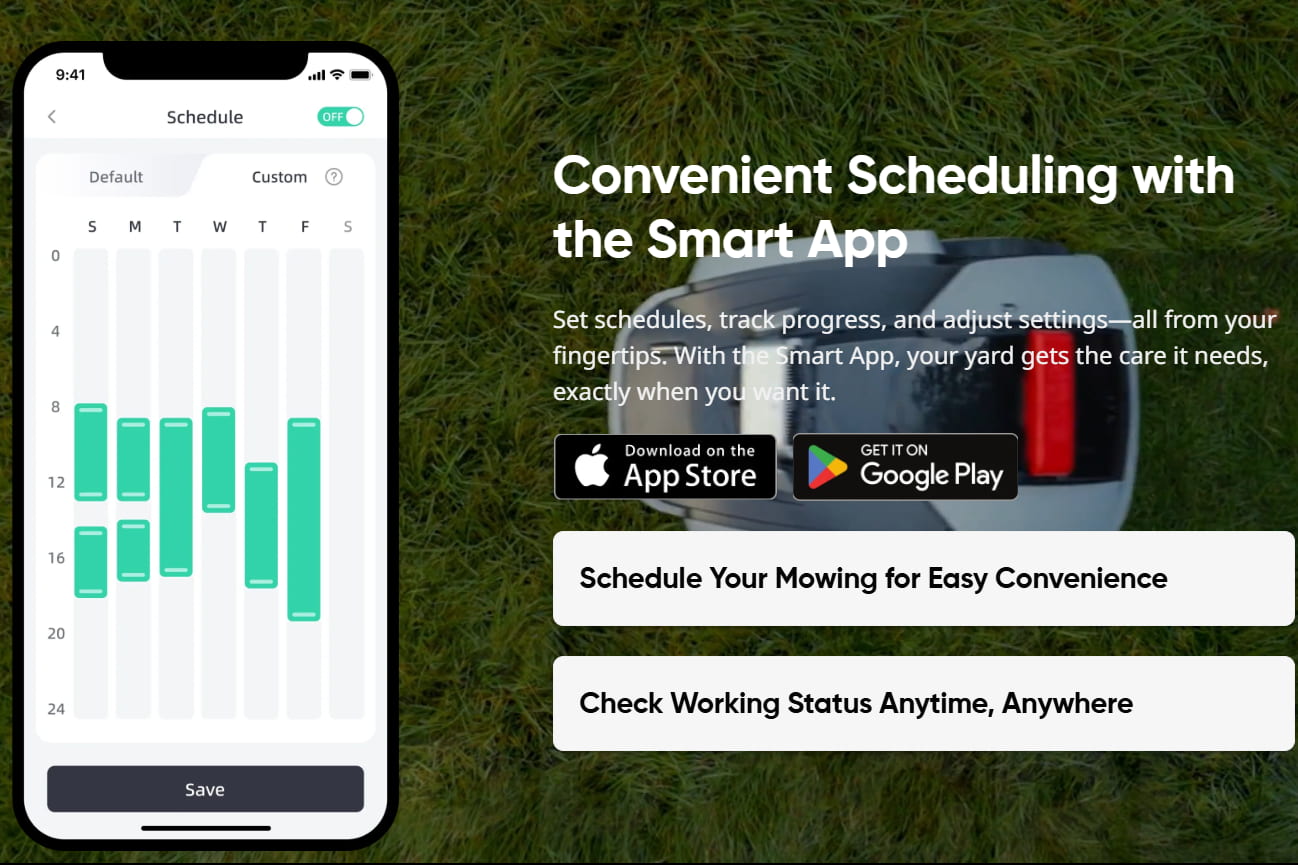
Convenient Scheduling with the Sunseeker Smart App
Construction Quality and Weatherproofing
The materials used in the chassis, cutting deck, and wheels determine durability. Premium models often use reinforced composites, corrosion-resistant alloys, and sealed bearings to withstand years of outdoor exposure and physical impact. Higher waterproof and dustproof ratings (e.g., IPX6) ensure reliable operation in rain and diverse conditions. This robust construction reduces long-term maintenance needs but increases initial manufacturing costs.
Brand Equity and Customer Support
Established brands with proven track records often command higher prices. This premium frequently reflects comprehensive warranty policies, accessible customer service networks, and a commitment to providing software updates that extend the product's functional life. Investing in a reputable brand can mitigate long-term risk and provide greater peace of mind.
Ongoing Costs of Ownership
The financial consideration of a robotic mower extends well beyond the purchase price. Understanding recurring expenses is crucial for evaluating total long-term value.
Routine Maintenance and Consumable Parts
Like any precision tool, robotic mowers require periodic upkeep. The primary consumable is the cutting blade, which needs replacement several times annually for an optimal cut. Wheels and bearings may wear over time. The most significant planned replacement is the battery, which typically retains good capacity for 3-5 years before needing renewal. Regular cleaning of the underside and sensors is also essential for reliable operation.
Energy Consumption
Robotic mowers are electrically powered, resulting in very low operating costs compared to gasoline models. Annual electricity costs are typically minimal (about €15), often amounting to less than the price of a single tank of gas for a traditional mower. This represents a consistent but small ongoing expense that favors the robotic model in long-term comparisons.
Software, Repairs, and Potential Upgrades
As connected devices, these mowers may receive software updates to improve performance or add features. While usually free, they signify an ongoing relationship with the manufacturer. Occasional repairs to sensors, drive motors, or connectivity hardware may be needed outside the warranty period. Some manufacturers offer upgrade paths for accessories or newer navigation modules.
Assessing the Return on Investment
Determining whether a robotic mower is "worth it" involves calculating both financial and qualitative returns.
Calculating Tangible Financial Savings
The direct financial return comes from eliminating numerous costs associated with traditional mowing: no more purchases of gasoline, engine oil, spark plugs, or air filters. There are also savings on professional lawn service fees or the depreciation and maintenance of a ride-on mower. Over a 5-7 year period, these avoided costs can substantially offset the robot mower's higher initial purchase price, often making it the more economical choice.
The Value of Reclaimed Time and Effort
The most significant return for many homeowners is time. Automating a weekly chore that consumes 1-2 hours reclaims 30-50 hours annually. This time can be redirected to family, hobbies, or relaxation. The elimination of physical exertion, exposure to heat, sun, and allergens further enhances the quality-of-life benefit, which many find to be the most compelling justification for the investment.
To understand how this time savings aligns with long-term financial value, you can explore Are Robot Mowers Worth It? A Comprehensive Cost-Benefit Analysis. That guide breaks down the projected 5-year costs of a representative robotic model for small lawns compared with traditional gas and electric mowers.
Contributions to Property Aesthetics and Enjoyment
A consistently well-maintained lawn enhances curb appeal and can contribute to property value. More immediately, it creates a more inviting and usable outdoor living space. The reliable, quiet operation of a robotic mower allows for uninterrupted enjoyment of the yard, aligning with a lifestyle that prioritizes leisure and outdoor living.
A Practical Guide to Selecting Your Model
A methodical approach to selection ensures your investment matches your needs.
Pre-Purchase Evaluation Checklist
-
Accurate Measurement: Precisely calculate your lawn's total mowing area in acres or square feet.
-
Terrain Assessment: Document the maximum slope grade and note all permanent obstacles (trees, beds, pathways).
-
Budget Framework: Establish a budget that includes the mower, any installation accessories, and an estimate for annual maintenance.
-
Feature Prioritization: Decide which smart features (e.g., app control, no-go zones, weather adaptation) are essential versus optional.
-
Research and Reviews: Invest time in reading professional tests and long-term user reviews for shortlisted models.
Common Pitfalls to Avoid
-
Choosing Underpowered Models: Selecting a mower with a maximum area rating that matches your lawn size exactly leaves no margin for growth patterns or complex routing, often leading to insufficient coverage.
-
Ignoring Installation Logistics: Even wire-free models require careful placement of the charging station and a clear understanding of the mapping process.
-
Overlooking Total Cost: Focusing solely on the sticker price without factoring in essential accessories, potential professional installation, or long-term battery replacement costs.
Conclusion: Determining Your Investment
So, what should you budget for a robot lawn mower? Your investment should match the needs of your landscape. For small, straightforward yards, an entry-level model delivers strong value. And options like the Sunseeker V1, equipped with Vision AI, obstacle avoidance, and ReadyGo™ system technology, make advanced automation accessible at the entry tier.
For larger or more complex properties, a mid-range or premium model becomes essential to ensure reliable coverage and consistent performance. While the upfront cost may be higher, long-term savings in both money and time help balance the investment. Choosing a well-engineered mower suited to your terrain turns lawn care from a recurring chore into a seamless, automated part of home maintenance.
FAQs
What is the average lifespan of a robot mower?
With regular maintenance, a quality robot mower typically lasts 5–8 years. The main battery may need replacement after 3–5 years. Proper seasonal storage and blade care significantly extend its operational life.
Can I install it myself, or do I need a professional?
Most residential models are designed for DIY installation, often guided by a smartphone app. Professional help is recommended only for very large, complex, or sloped properties to ensure optimal setup and coverage.
What happens if it rains?
Modern robot mowers are weather-resistant. They can operate in light rain, but heavy downpours trigger built-in rain sensors, automatically pausing work and returning to the charging station until conditions improve.