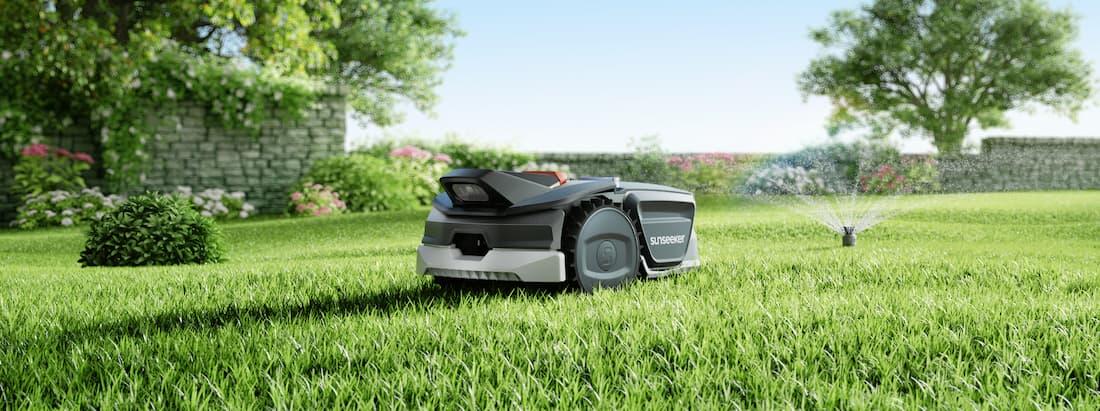
Why Do You Need a Robot Mower for Hills?
When mowing a lawn with hills, it's important to focus on safety, consistency, and efficiency. Traditional mowers often slip or require extra physical effort, which can lead to uneven cuts and fatigue. Robot mowers are designed to handle these challenges and offer the following benefits:
- Safer Mowing on Sloped Areas
Robot mowers are designed with smart sensors and strong traction control, making mowing on inclines much safer. You no longer have to push or balance heavy equipment on steep ground, which reduces the risk of slipping or getting injured while mowing steeper sections of your lawn.
- Consistent and Even Cutting Results
Unlike manual mowing, which depends on your pace and direction, robotic mowers operate at a steady speed with precise cutting patterns. This ensures that your lawn looks evenly trimmed, even in areas that are typically hard to reach or manage, and across different levels of terrain.
- Efficient and Time-Saving
With scheduled mowing and automatic navigation, robot mowers can take over routine lawn care with minimal supervision. You can maintain a neat lawn and prevent grass from growing too long and becoming harder to manage without spending hours each week on lawn care.
- Adaptability to Complex Lawn Conditions
Modern robot mowers are built to handle more than just flat surfaces. They can navigate bumps, dips, and slopes while maintaining steady performance. This makes them a reliable choice for lawns with challenging layouts.
Which Features Matter Most for Sloped Yards?
Before buying a robot mower, you should know which features are most important for sloped yards or hilly lawns. Besides looking at the price and brand, you should pay attention to specific features because they impact how well the mower performs on inclines and rough terrain. Here are some features you can take note of:
1. Slope Handling Capability
When dealing with hills, stability starts with the mower’s design. A model with a low center of gravity is more resistant to tipping on steeper inclines. Based on common standards, slopes between 15° (27%) and 20° (36%) are considered moderate, so it’s important to choose the best robot lawn mower for steep hills that can handle those levels or higher.
2. Traction and Wheel Design
Grip is also crucial for a robot mower's performance on slopes. Large, rugged wheels with deep treads help maintain stability by preventing slipping on wet or uneven surfaces. Mowers with a front-wheel drive system are more effective because they provide better traction and stability, which is useful to maintain grip and move smoothly across inclines without slipping.
3. Smart Navigation System
Navigation technology allows robot mowers to operate more efficiently on complex terrain. With the support of sensors and AI vision, the mower can map your lawn, detect obstacles, and adjust its path in real time. This feature is especially useful for sloped yards with irregular layouts, where precise movement is needed to avoid getting stuck or missing certain areas.
4. Weather Resistance
Hillside lawns are often exposed to moisture from dew and drainage, which can keep the grass damp longer than expected. A mower with a strong water resistance, such as an IPX5 or IPX6 rating, can handle these conditions without performance issues. This ensures the mower continues to work reliably, even when the ground is slightly wet.
Best Robot Lawn Mower for Hills
When you’re ready to buy the best robotic lawn mower for uneven ground, below are two of the best models from Sunseeker. They are designed to perform well on sloped and uneven terrain, including hills.
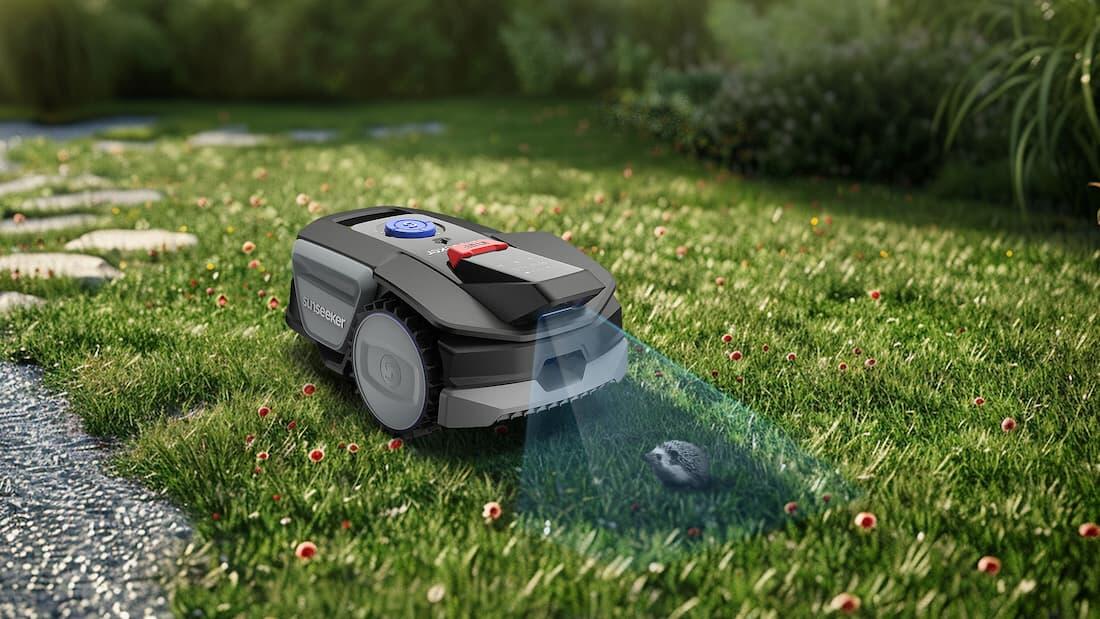
Sunseeker V1
The best robotic lawn mower for hills should offer a balance between stability and smart functionality, and the Sunseeker V1 delivers on both. It features a front-wheel drive system that improves traction, allowing it to climb slopes up to 15° (27%) with steady control. Its 16 cm cutting width and adjustable cutting height from 20–50 mm make it suitable for various grass conditions, while the built-in AI vision helps it distinguish between grass and non-grass areas for more efficient navigation.
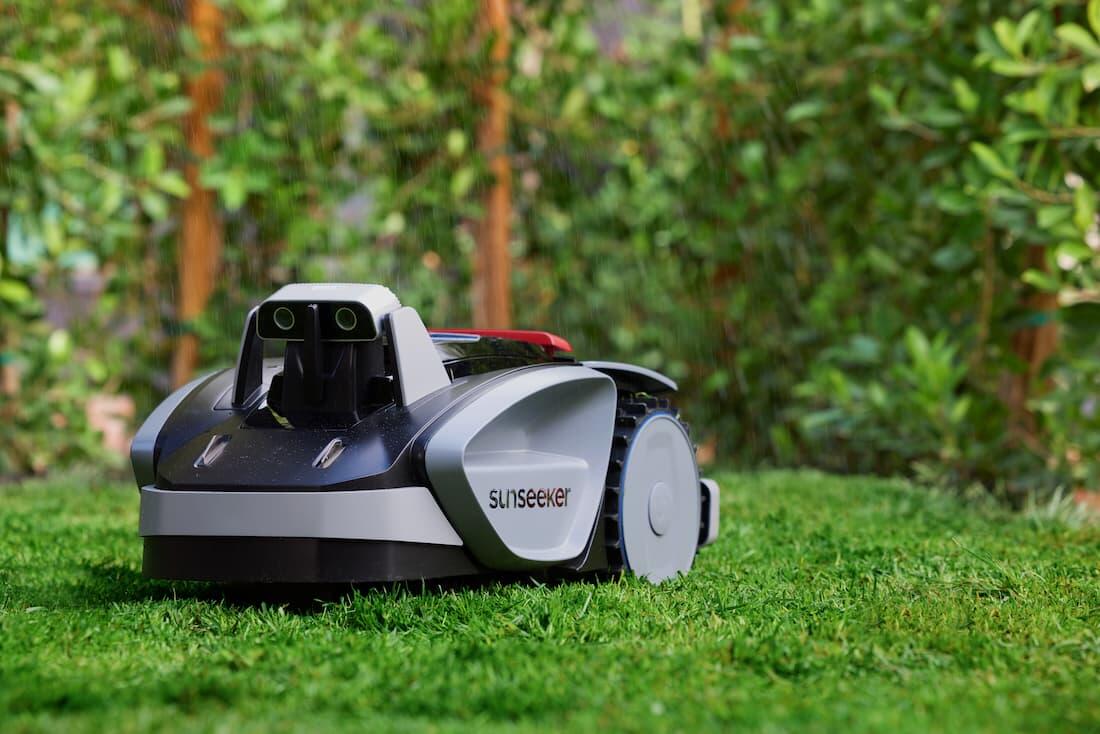
Sunseeker V3
For more challenging terrain, the Sunseeker V3 is an excellent choice for those seeking the best robot mower for rough terrain. It features a floating cutting system that adapts to uneven surfaces. This model can handle slopes up to 22° (42%), supported by a 3D Vision system with a binocular camera that accurately recognizes lawn contours. It also features an automatic windscreen wiper to keep the camera clear and a smart rain sensor that sends the mower back to its base when it rains.
How Do You Choose the Best Robot Mower for Slopes?
Choosing the right mower for slopes involves evaluating your yard and matching it with the mower’s capabilities. Below, we provide a simple list to help you find the best robotic lawn mower for your needs:
- Understand Your Lawn’s Steepest Point
It’s important to measure the size and steepest incline in your yard. This will help you determine whether a mower’s climbing capability is suitable for your terrain. A model with insufficient slope handling may slip or struggle to maintain stability.
- Battery Capacity for Sloped Performance
Mowing on hills requires more power compared to flat surfaces, which can drain the battery faster. To maintain consistent performance, it’s a smart move to choose a robotic mower designed for steep slopes with a high-capacity battery.
- Smart Features for Better Control
Modern robot mowers come with advanced features that make lawn care much more manageable. GPS tracking, Wi-Fi-enabled smart app control, and obstacle detection systems allow you to easily monitor and adjust mowing schedules.
Conclusion
Maintaining a sloped lawn begins with selecting a mower that aligns with your terrain and expectations. Paying attention to key aspects such as slope capability, traction, and smart features can help you avoid common issues like uneven cuts or limited performance. Taking this approach ensures that finding the best robot mower for hills becomes a smarter investment that supports long-term lawn care while giving you more time to focus on other priorities.
FAQs
Are robot lawn mowers good on hills?
Yes, robot lawn mowers can effectively navigate hills if they are designed with proper traction, slope-handling capability, and smart navigation systems. Models built for uneven terrain can maintain stability and provide consistent cutting results. This makes them a reliable option for reducing manual effort and improving safety on sloped lawns.
What is the best robot lawn mower for slope?
The best robot lawn mower for slopes depends on your lawn’s steepness, size, and terrain complexity. Models with strong traction, high slope ratings, and advanced navigation features tend to perform better. Additional features like floating cutting systems and smart sensors also help improve efficiency and ensure even cutting across uneven and sloped surfaces.
What is the maximum slope for a robot lawn mower?
The maximum slope a robot lawn mower can handle varies by model, but high-performance units can manage slopes up to around 35°/70%. These models are built with powerful machines, advanced traction systems, and stable designs, allowing them to operate safely and maintain consistent performance even on very steep and challenging terrain.